
Use Cases & Trials
UC CITIES 3 - Security Coordination

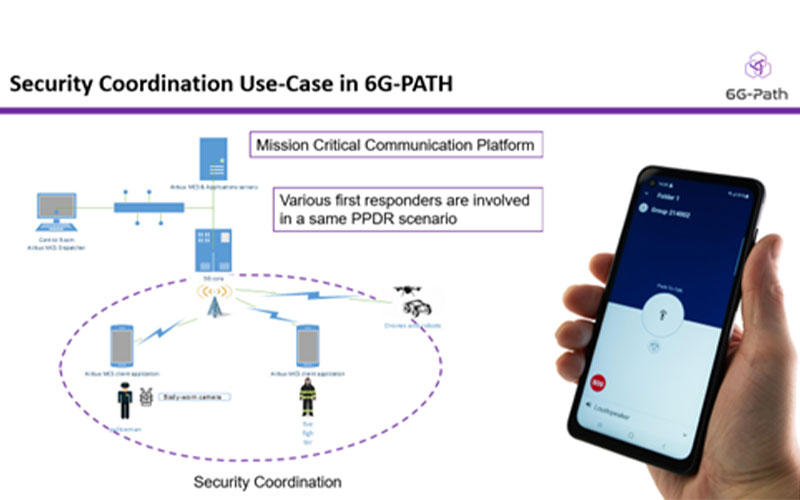
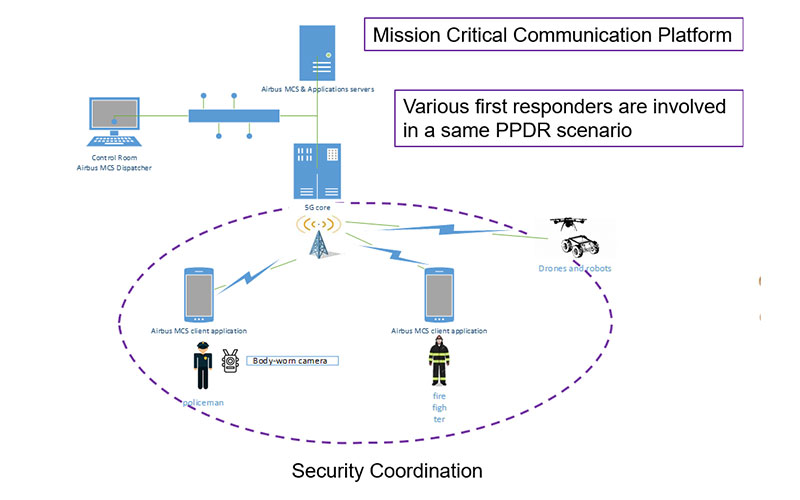
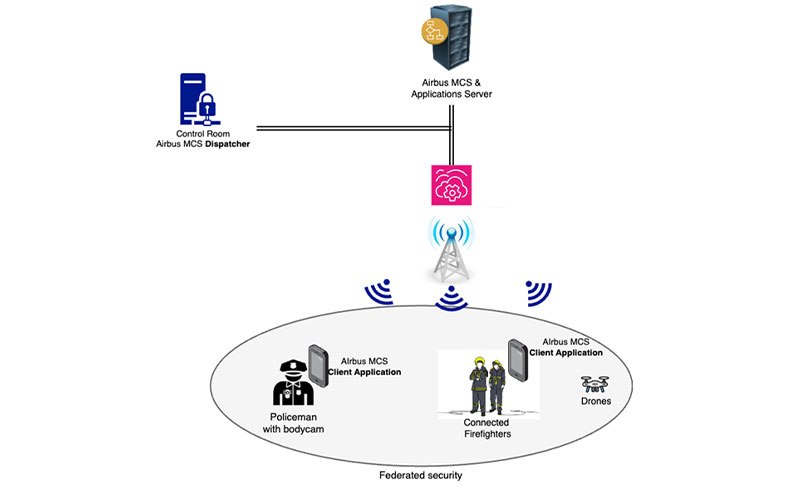
In a traditional emergency response situation, communication between public safety end users can be slow and unreliable, which can lead to delays and potentially dangerous situations. To address this problem, smart cities are leveraging advanced communication technologies like 5G and 6G to create more secure, efficient, and effective communication platforms for public safety end users. In this use case, public safety end users have access to a secure, mission-critical communication platform that leverages 5G and 6G technologies to ensure fast and reliable communication.
Partners


Use Case Overall
In this use case, many aspects of emergency response situation are explored. To do so, mission critical solution will be deployed on a platform as an end-to-end solution. This platform and the smart cities context will leverage advanced communication technologies like 5G and 6G and thanks to that, emergency response scenarios will be more secure, efficient and effective for public safety end users. The deployment of the mission critical solution on the platform will offer multiple benefits for the emergency response situation and security coordination.
In the event, for example, of a fire in the city, new technologies like 5G/6G will, for example, reduce the latency so it will improve response times when an emergency situation occurs. Public safety users will also take advantage of the possibility to share more data in more efficient way in order to improve the intervention with the right people, at the right place, with the right tools. First responder will be able to see on their equipment a map with the others first responders in order to coordinate the effort. They will also be able to share messages and photos/videos of what is happening in a secure, efficient, and effective way.
The platform would provide real-time communication, situational awareness, and collaboration tools to help first responders on their day-to-day operations, quickly respond to emergencies, coordinate their efforts, and ensure public safety.
The integration of mission critical solution on this platform has the potential to significantly improve public safety and emergency response, making it a priority use case for future development. The integration of the platform with the smart cities testbed will further increase its functionalities, allowing for an increased situational awareness of the entire area.
Key Objectives

Better management of emergency situation.

Improvement of the communication between end users.

Better coordination between security forces.
Expected Innovations/Outcomes
Enhanced Public Safety
The secured mission communication platform will enable emergency services to coordinate and respond more efficiently to emergencies, resulting in improved public safety.
Improved Response Times
The use of 5G and 6G technologies will enable faster data transfer, allowing emergency services to respond quickly and effectively to critical situations.
Better Decision Making
The real-time data provided by the secured mission communication platform will allow emergency services to make informed decisions, resulting in better outcomes.

Increased Efficiency
The automation of certain tasks and the ability to share information in real-time will lead to increased efficiency and effectiveness of emergency services.

Better Resource Management
The ability to track resources in real-time will enable emergency services to manage their resources more effectively, resulting in improved response times and better outcomes.
KPIs
- Reduction of the Latency
- Increase of the Data Throughput
- Increase of the Type of Data That Can be Exchanged
KVIs

Reduction in emergency response cost.

Reduction in false alarms and unnecessary dispatches.


Increase efficiency in resource utilisation.

Increase network reliability.
Use Case Alignment with UN SDGs
UC-CITIES-3 uses advanced 5G/6G-enabled, secure communication platforms to empower first responders and emergency services, directly supporting SDGs on health, resilient infrastructure, safe cities, strong institutions, and collaborative partnerships.
Real-time, secure communication and situational awareness for first responders enable faster, more effective emergency and disaster response, directly improving public health and safety (Target 3.D).
Leveraging 5G/6G for mission-critical communications builds resilient, innovative digital infrastructure for public safety and emergency management in smart cities (Target 9.1).
Enhanced coordination and rapid response across agencies help cities better prepare for, respond to, and recover from emergencies and disasters, making urban areas safer and more resilient
(Target 11.5).

Inter-agency collaboration and secure, transparent communication platforms strengthen the effectiveness, accountability, and coordination of public institutions during emergencies (Target 16.6).
Smart City Trial Including Security Use Case
- 28 May 2025
- Aveiro, Portugal
This trial will allow users to experiment the mission critical solution on the testbed offered by IT/ALB. The objective of this trial is to experiment mission critical services (voice, data and video) on the platform by taking advantage of the new communication technology provided.
Pilot Engagement and Feedback Collection with Firefighters
- June 2025
- Paris, France
Some Firefighters will have the opportunity to experiment the use case. It will be a great opportunity for them to give feedback and for us to explain the project. We will also take the opportunity to collect KPI and KVI through questionnaire and interviews.